Oh Captain, My Captain: thoughts for roller derby team captains

I had the very great privilege to be co-captain of Light City Derby’s Regimental Rollers for one and a half seasons, and I think it will always be something I am most proud of as far as my roller derby achievements go.

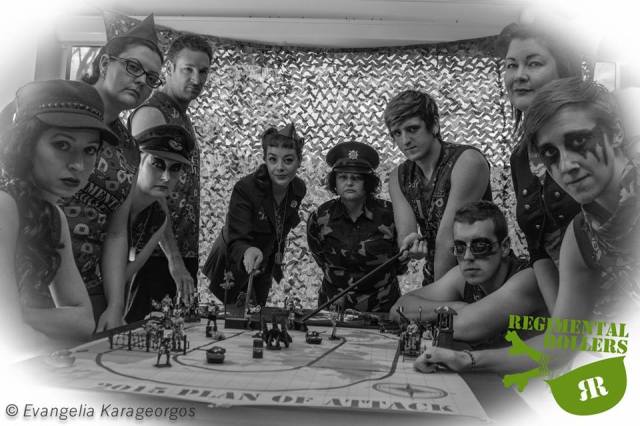
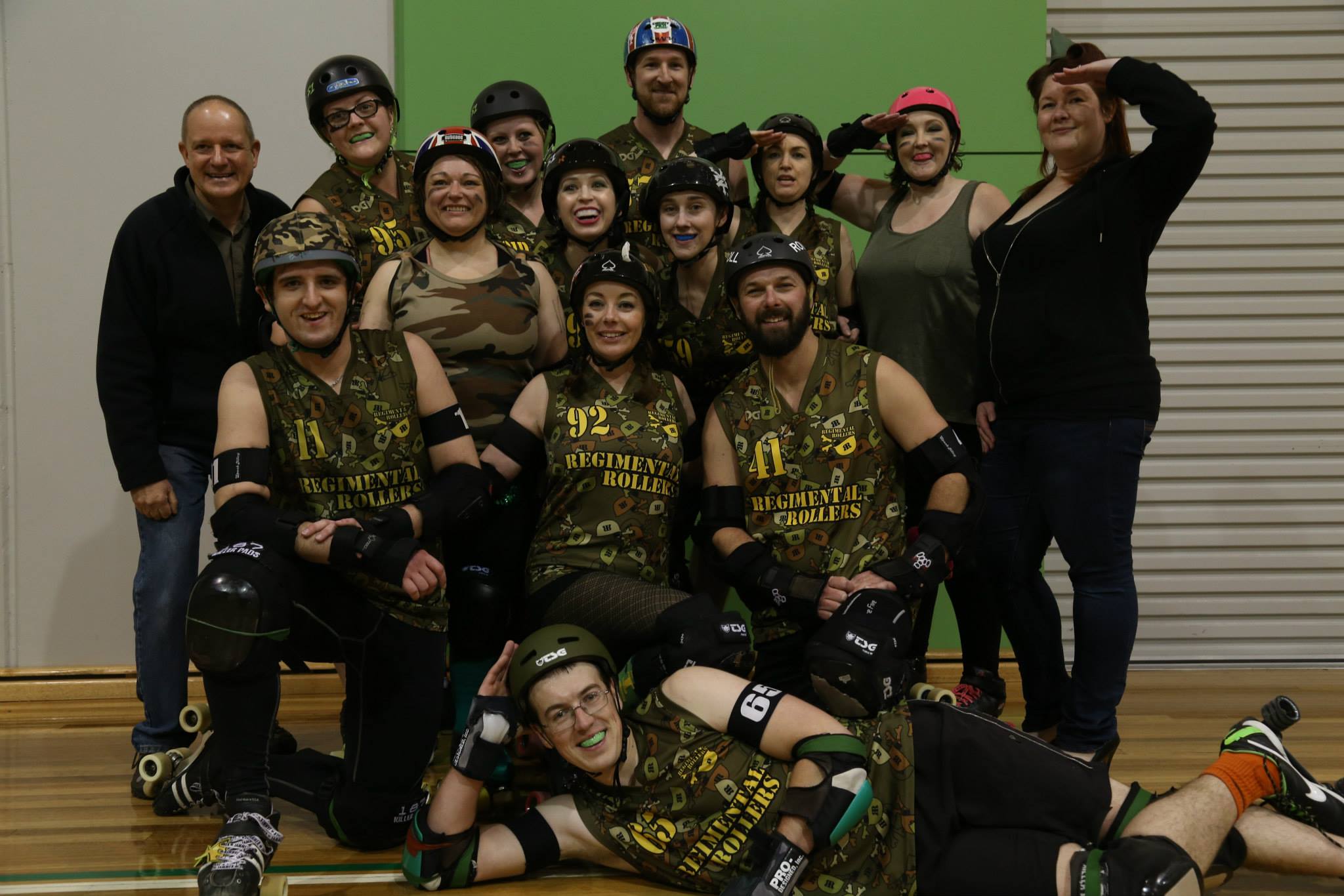
11143209_10153439206793530_2267769689329903474_n

Favourite team photo, by EK Photography

There’s more to being captain than strapping on a ‘C’ in a scrimmage or bout, and this post is not about what your roles and responsibilities are as a captain on track on bout day. I look at my past captains and what strikes me about them, when I think about why I valued them as captains, was their people skills and the hard yards they put in off the track. Being a team captain takes a lot of work.

Of course every team will work in its own way and every team becomes a new team under different leadership, or with changing members. These are my thoughts on captaincy, presented as a handy four-point list.

strategy

Strategic!

You don’t have to be the best skater on the team, have all the answers, or be a derby super star. You do not have to be the loudest voice in the room. I was none of these things, and I think I did ok! Good leaders build a team by recognising the strengths of others, not dominating or outshining them. Being a good captain is far more about attitude than skating skills and titles. If you’re not interested in fostering the development of your team mates and only in it for the glory, captaincy may not be for you.

Your job is to unite the team – the whole team. Don’t forget about the people who didn’t make the roster, are off with injury, are new or lost. On bout day, your focus is the team rostered to play. Every other day (and there are a lot of them), you should lead the team as a whole, not a few.

How do you do that? Talk to them! Building a good team culture starts with knowing your team mates and figuring out how you can help and support them. Do they need encouragement? Feedback? A sounding board? Are they happy just to do their own thing? Will they just appreciate a touch point while they are recuperating from injury? Key to being a good captain is your ability to be approachable, supportive, and fair, and understand what your team needs and doesn’t need from you.

small

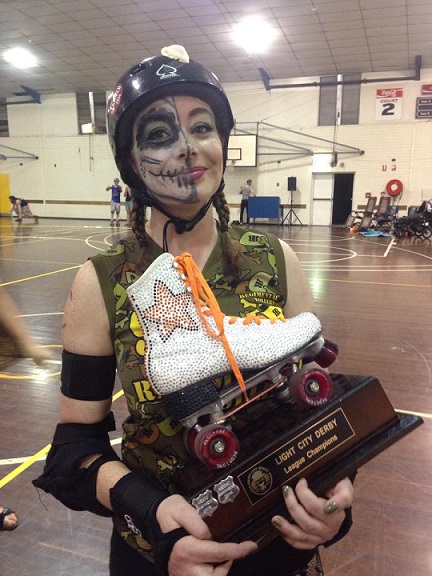
Grand Final 2015. This is my proud face.

Don’t indulge drama – and there will always be drama! As a team captain, you might sometimes have to make unpopular decisions. You will also often be the conduit for delivering league news and outcomes which you yourself may not like or agree with. You might see team mates who don’t get along or you may not get along with some of them yourself. Be objective and league-minded. Don’t indulge. As captain, you are in a position of authority and a position of trust – this is the time when you need to uphold league values and behaviours and lead by example.

What it boils down to is walking the talk. Be a role model for your team by committing to and living the basics – going to training, putting in full effort while you are there, respecting your trainers, officials, benchies and league mates. Know your team mates – all of them – and encourage them to work together, to build on their strengths. Talk to your team! A good attitude and decent people skills are what make a strong captain, not just the letter C.

‘Til next time,

Sig


Mental game: the ‘run and hide’ method

A lot has been written about goal setting specific to roller derby. A few years ago, my team mate and derby idol St Eve (aka Eve Inbetta) wrote a  great post that I found incredibly helpful on how to set meaningful derby goals – you can read it here. But while much gets said about how to set goals and why having them is a good idea, not much gets said about what to do when you follow all the steps, do all the right things, and still fall short of your goals. Mental game training is all about resilience, but when things just don’t work, repeatedly, despite your very best efforts, it can seriously dent your confidence. It certainly did mine.

I’m not a natural athlete by any definition. And while derby was once lauded as a sport for non-athletes, the way the game is played today is far more suited to those with a natural sporty edge. I take derby seriously, I try to set realistic goals, I work hard on fixing my mental game and improving my weaker skills. But ultimately I ended up taking a very long break this year because not a single one of my goals for the first half of 2016 came to fruition and, I’m not gonna lie, it hurt. A lot. It’s not like I was just casually plodding along, hoping for the best.

I tried HARD and I failed.

I have thought long and hard about why this was and what it meant, and why I felt so humiliated. I’ve been skating with my league for 3+ years. Had I set unrealistic goals? I didn’t think so. Am I just a bad skater? I’m not great but I’m not awful, surely? It’s easy to say don’t compare yourself to others, but when people take to something you struggle with like ducks to water, it’s hard not to wonder what secret they have that you’re missing out on. I did my best, what more could I do? I’ve pondered a lot during my break whether there is even a place for me in derby if I can be around for this long and still not achieve some seemingly very achievable things.

img_20160925_155742

Why don’t you work?

There’s a great saying about falling down nine times and getting up ten, but let me tell you how exhausting that can be. As an over-thinker, over-analyser, and my biggest critic, soldiering on was only serving to dig my hole deeper. I was too close, too critical, too sore. It’s no surprise to me that eventually I had to run away to lick my wounds. This mental game business is hard work, and while goals are important and there are ways to set good ones that put you on the right track, success is never a given. It’s a sucky truth that sometimes things just don’t work out.

Taking a break has not been easy. As much as I needed to clear away some thoughts and set my derby brain in order, the trade-off has been feelings of displacement and serious FOMO. Still, taking a break was the right thing for me and if it has taught me one thing it’s that I’m not ready to give it all away. I hope I can find my place again soon.

So how do you build yourself up when you fall short? Shit dude, you’re asking the wrong girl because I have no idea. But when I head back to training in November, I’m going to start by trying a few of these and seeing how it goes:

  • Focus on more process goals and fewer outcome goals
  • Take a step back; don’t over analyse
  • Ask for feedback; ask for help
  • Celebrate small wins
  • Be kind to yourself

If you have any advice, I’d be keen to hear it.

‘Til next time,

Sig

Top 5 Unexpected Benefits of Roller Derby

When I started training for roller derby, I had an idea in my head of what I wanted to get out of it – it was for fitness, it was to be social, it was for fun. I’d be stronger, more coordinated. I’d be able to do cool stuff on skates. Derby though – in that delightful derby way – is full of surprises. Here’s my top five unexpected benefits of roller derby…

1. I don’t need to touch door handles
Because I can just hip check every door and drawer closed. Keeps my mitts germ free and all.

2. Lulls in conversation do not exist
You know why? Because I’m talking about derby. Why can’t I do that thing I’m trying? What wheels should I get? Who’s going to training? Who’s not going to training? Did you see that awesome thing that worked? Where did you buy your sparkly shorts? Or, with non-derby people, “Oh, you haven’t watched derby? No, there isn’t a ball. Let me explain…” Awkward silences? A thing of the past.

newb

Photo by Erin Green. Note my lack of sparkly shorts.

3. Body confidence
Never did I ever think I would be ok rocking up to the pub in fishnets and booty shorts. Because of, you know,  flaws and because if I am basically not wearing pants, I’m notoriously, you know, self conscious. But I am totally ok with it. I think I rock them pretty damn well, actually. The thing I love about derby is that there is no perfect size or shape. There is no ideal derby body. Any body is a good body for derby. I’ve never felt more at home in mine.

4. Answers to questions
I hate to be put on the spot with questions like ‘what would you like for your birthday?’ and ‘is there anything you need?’, but derby gives me ready-made answers in times of need. I’d like new elbow pads. I need new wheels. New knee socks. Those cute sparkly shorts with my name on them. A gift voucher for a skate shop. That would be really handy, thanks for asking! (See also: ‘what are you doing on the weekend?’. Derby, duh.)

5. Ability to negotiate terrible amenities at music festivals
I’m never more grateful for derby stance than when I need to pee in a port-a-loo. True story.

‘Til next time,

Sig

5 Things That (Almost) 2 Years of Roller Derby Has Taught Me

Back in 2013, when I had just failed my first attempt at roller derby fresh meat, I wrote this post about what the 10 week training program had taught me. In a move strangely contrary to how I normally respond to failure, I stuck with it – mostly because of the things I wrote about in that post. We’re coming to the tail end of my second season playing roller derby and a LOT has happened, including some achievements that I am really proud of. Amongst them: co-captaining my team, playing interstate, playing in the Great Southern Slam, being on my league’s Board, PR Crew and Event Committee. It’s been hard work and oftentimes it has also been confronting and humbling. It’s driven me to tears, made me laugh hysterically, and sometimes made me more exhausted than it seems reasonable for a regular human to be.

I’ve read a lot of those ‘roller derby saved my soul’ posts. This is not one of those posts. Don’t be so over dramatic. Roller derby did not save my soul, even though it came into my life during a somewhat apocalyptic time. My soul didn’t need saving. Derby, actually, can be a tough mistress. It’s built me up, it’s knocked me down. Rinse, repeat. But regardless, roller derby has taught me some stuff and some of that is stuff about myself. Some of those lessons have been hard, some less so. It seems a good time then, with the 2015 grand final looming, to revisit my list. So here are 5 things (almost) two years of roller derby has taught me…

Everything IS cool when you’re part of a team

No, seriously. I’ve never played team sports before and I can’t tell you how much I value being part of my team. My team is awesome – we support each other, we challenge each other, we make each other laugh. We’re there with a kind word, some strong advice, a lame joke and a pat on the back at the end of the day. All of this makes us a strong unit on the track. We know each other’s strengths and weaknesses, we know how to work together, how to communicate to get the derby done. As someone who struggles with confidence on the track I really appreciate my team mates across the league whether they are in my home team or one of our travel teams. They are all different in their skill level, style and approach but they have one thing in common when we play: they each make me feel like a stronger skater.

Photo courtesy of Erin Green.

Photo courtesy of Erin Green.

 You DO have to work on your mental game

I’m such a jerk – to me. I get inside my head and I focus on the things I do wrong rather than the things I do right. Or what I think I can’t do rather than what I can do. Mental toughness is under-trained or, more often, completely ignored and we tend to forget that activities that are taxing on the body can also be taxing on the mind. I have a habit, which is well known in my league, of shaking my head aggressively when someone hands me a jammer panty and – usually mid jam – declaring “but I’m not a jammer” which is exactly what not to do. So I’ve been working hard on some strategies in this regard – it’s been a big goal for the last half of the year. It’s really easy to forget how far we’ve come. Naomi ‘Sweetart” Weitz nails it in her book The Ultimate Mental Toughness Guide: Roller Derby. I can’t recommend this book enough, particularly for its derby relevant examples. You can buy it on Amazon here.

Also, these peeps have some great tips around improving your mental game and probably say it more eloquently than me:

http://www.derbycentral.net/2015/06/qs-tips-mental-training-and-how-we-self-sabotage/

http://callthejam.com/2013/12/13-things-mentally-strong-derbyists-dont-do/

http://khaostheoryblog.com/2015/04/24/why-we-play-2/

Leagues take A LOT of effort to make them work

Take a minute to think about how much time and effort might go into coordinating a whole year of training sessions and bouts: booking venues around availability, assigning trainers, assessing potential clashes, working out a logical season structure. Now think about all the other parts of a running a business that you might not instantly associate with your league when you rock up with your skate gear and get on with your fun skatey times. Managing the legalities of things like insurance and memberships, finances and accounts, promotion and marketing. And that’s just the beginning. I had little to no idea how much work goes into making my league all that it is and all it can be. Do your bit, give someone a hand with organising something, take a hands on role – ‘by the skaters, for the skaters’ isn’t just a catchy slogan. It’s what derby is about and it’s why we get to come along to training and have a blast.

You CAN be tough, even when you don’t want to be

This is the one thing I am including on the list that runs the risk of straying dangerously close to ‘soul saving’ territory, but bear with me. Derby has proven to me time and time again that I am strong and capable even when it would be far easier to hide under a blanket and hibernate my way through the tough stuff. And maybe it was true all the time, but derby is a constant reminder that I can handle shit and that, actually, I can be brave too. It’s a powerful lesson to learn that you can tap into those inner reserves and manage difficult challenges on skates or off.

Photo courtesy of Erin Green

Photo courtesy of Erin Green.

Roller derby is a special community

Roller derby blows me away with its inclusive spirit. It’s fascinating to see such diverse types of people come together and build such a strong community around this sport. I think one of my league mates captured exactly what I want to say when she recently told me: “there’s a shift happening – the sport is becoming less about the public spectacle, and more about skills and health and fitness and strength and community. Our community is built on the positive relationships we’ve built between our intraleague teams as well as with other leagues (because those are our fans – plus our mums), plus a sense of support and growth between leagues both here and interstate.”

Thumbs up, roller derby. You get me.

What else are you going to do when you stumble upon Derby Street?

Human pyramid. Because what else are you going to do when you stumble upon Derby Street?

Incidentally, if you are in the area, you should definitely come along to the Light City Derby Grand Final on 31 October (Halloween!) which will see the Regimental Rollers battle the Galactic Guardians for the coveted (and sparkly!) LCD season trophy. Saturday 31 October at St Clair Recreation Centre, Woodville SA. Doors at 6pm, $5 entry.

‘Til next time,

Sig

#winning

I feel like what I am about to say is a bit of a strange notion and I’m not sure I have the words to quite capture what I mean. Last Saturday I played in a game of roller derby and my team won. This is my second season playing and my first ever win. It felt good, but it felt weird.

My beloved Reggies. (Photo courtesy of Pop Hazard & Erin Green).

My beloved Reggies.
(Photo courtesy of Pop Hazard & Erin Green).

I’m not going to lie: I wanted to win. I wanted to do a victory lap and see my team take away the first bout of the year. But to be totally honest, winning didn’t feel as different as I expected. I came out of the game feeling the same way I always do: incredibly proud of my team, self critical but mostly pleased with my efforts, chuffed to be doing this crazy thing at all, in serious need of a beer.  My team played amazingly, we worked hard, some things didn’t work but a lot of things did. It was a really good game and I was really proud. Winning gave everything a rosy glow and it was nice, but it didn’t feel different in any real sense of the word. Is that as weird as it seems? I guess it’s a good thing, but I’m fairly baffled by the whole experience.

Really the only thing that felt different was that I finished the game with six penalties (worst ever) and a limp (x-rays pending), but that would have been true had we been points down instead of points up. I’ve been mulling it over all week and I worry that maybe I’m not competitive enough or that I’m missing something obvious. Maybe I just see team success differently and not as points on a scoreboard. Maybe I’m over-thinking it. I don’t know. It might be the next bout when I get my head around it. I might never get my head around it. It was just totally unexpected and strange.

10 Things That 10 Weeks of Roller Derby Has Taught Me

I couldn’t shake the nerves. I bent lower to tie my laces, eyes downcast, heart thumping a tattoo in my chest. Before me, on the track, they glided along like swans on the water; graceful, natural. Their speed was effortless, their movements fluid. I knew my own movement was ungainly, my speed non-existent, my balance intermittent at best. I watched as one girl spun around and in one seamless motion was skating backwards. I felt a knot in my stomach. What if I couldn’t even go forwards? I rolled a skate experimentally on the floor. Indoor boards were new. Indoor boards were slippery. Start slow, I told myself. Get a feel for the floor. Don’t be intimidated. Then, more forcefully, don’t make an idiot of yourself.

*   *   *   *

Back in January I went along to the first fresh meat intake session for 2013 being run by Adelaide’s mixed gender roller derby league, Light City Derby. I was terrified and no amount of smiling, welcoming faces could put me quite at ease. Two good skating buddies came with me, thank goodness, and we threw ourselves into the first session. It was challenging but it was rewarding. High on endorphins and inspired by what we saw around us, we stuck with it and went back the next week, and the next.

I watched myriad bruises blossom over my body, felt oceans of sweat pour down my forehead and back, and fought with my inner demons who insisted for weeks that I was wasting my time. I kept trying, listened to the words of encouragement from league members and tried to take on board every tip they could offer. At the end of ten weeks, I didn’t pass my skills test but ticked off more skills than I ever thought I could. But the experience of those ten weeks was more than ticks in boxes. People say roller derby has this strange power that reverberates through your life, making it more than a sport. My first fresh meat experience taught me some big lessons, and I think they’re lessons that can apply outside of derby too. I’m no derby expert, and not everyone’s experience would be the same as mine, but in ten short weeks, this is what it I learned:

1.       Falling down is a good thing

One thing that’s guaranteed in roller derby is that you will fall down. My first hurdle was letting it happen instead of freaking out and flailing my limbs around trying to stay upright. It was scary being so far outside of my comfort zone and knowing I could take a tumble and hurt myself trying to do something my skills weren’t quite up to. Despite this, I knew my skills would never be up to it if I didn’t try. It only took a few falls to realise that falling down wasn’t going to kill me, that I could pick myself back up, keep going, and get better.

2.       Don’t worry about what everyone else is doing

It took me ages to figure this one out. For the first few weeks I felt like I wasn’t keeping up. It seemed to me I was last to pick up baseball slides, slowest on track for endurance, completely unable to jump, while other Freshies were leaping tall buildings in a single bound. Finally, on the verge of quitting, I figured out what was wrong. I had been so worried about how I compared to others that I forgot to focus on developing at my own pace. No one was worrying about me. They were focusing on their own abilities, their own problem areas, mastering a new skill.

3.       No one will laugh at you for messing up

A lot of the training drills weren’t easy, and I usually felt out of my depth. At first it surprised me when I made mistakes and no one told me to give up and take up knitting instead. There were always people there to pick me up, dust me off, point out where I went wrong and encourage me to keep trying. After all, they had to start somewhere too.

4.       There is no substitute for practice

It seems an obvious thing to say, but roller derby really does give back what you put in. Weeks where I was short on practice time were more challenging than weeks where I made extra effort to get out and skate between training. Spending extra time on wheels was the best thing I could do.

5.       Asking for help is not a sign of weakness

Once I realised that no one was judging me harshly for not quite nailing crossovers yet, I discovered that if someone can do something and you can’t, chances are they will be more than happy to give you some pointers. They’re not trying to outshine you, and they won’t think less of you if you say, “I need help with that, can you show me?” They’ll more likely give you a pat on the back for wanting to learn.

6.       I can do stuff I didn’t think I could do

Here’s a secret. My worst enemy is not the blocker who I know is about to hip check me into next week. It’s me. I talk myself out of doing things all the time by assuming I’ll be bad at them. I’m uncoordinated, I’ll say. Not strong enough. Not a natural. What training showed me, was that I can do things. I can even do some of them well. And that’s with wheels strapped to my feet! What else have I been missing?

7.       Your muscles will love you for using them

Sure, they’ll scream at you the next day and you’ll hobble around the office or uni or home like a cowboy, but your muscles really love that you’re using them. I have a desk job, write a lot, and love a good book or movie. That’s a lot of sitting. I’ve never been sporty and don’t go to the gym. What that meant was my body really copped it when training started. But the sudden shift has made the difference I feel more noticeable. I’m fitter, happier, more productive (thanks, Radiohead!).

8.       Being surrounded by like minded, talented people is good for the soul

There’s nothing more satisfying than being surrounded by people who are on the same wavelength as you. You share a common interest and can giggle when you knock each other over. By far the best thing about roller derby so far, for me, has been the awesome people who make it happen. They are inspiring, supportive and fun, and work hard to make newbies like me feel welcome as they induct me into the derby world.

9.       Roller derby  is a totally awesome sport

Athleticism, major speed and cat-like agility. A fast paced game with hard hits and big falls. Clever names and fishnets. On wheels. What’s not to love?

10.   I am going to keep going

Really, as I went through the ten weeks of training, I ran the full gamut of emotions. I experienced phases of seeing improvement, of hitting a plateau, of completely screwing up, and of improving again; I’ve had low moments and I’ve had major boosts in confidence. I’ve spoken a lot in this post about the benefits of soldiering on, and I think that’s the point. Perhaps most importantly, I learned the benefit of pushing myself to keep going, and that’s what I intend to do. Roll on Fresh Meat v2.0!
skate